Why does everything work in Vitro but not in Vivo? (2023 revision)

Author’s note: This is interestingly one of the most popular pieces on my blog, but it is one of my earliest and one that I’m least happy with. As my understanding of data science has evolved, I’ve come to see it as less nuanced than my later work. I initially approached the subject from a systems dynamics standpoint, while now I approach it with supervised statistical learning. While I still think the fundamental truths behind the post are valid, I’ve revised it to reflect my current understanding. The original blogpost is HERE.

Why is this the case? As physicians, we often seek a “silver bullet” – a single, effective solution with no side effects. The simplicity of Occam’s razor is alluring. One drug, one cure. The key fits the lock and opens the door. Penicillin cures Syphilis. But what if things are not that simple? What if treating some diseases is more like navigating a series of locked doors? A potential treatment may be blocked by the body’s own systems, such as drug elimination or homeostatic mechanisms. This complexity is often overlooked in experimental design, and it could be leading to a gap between in vitro success and in vivo applicability.
www.n2value.com

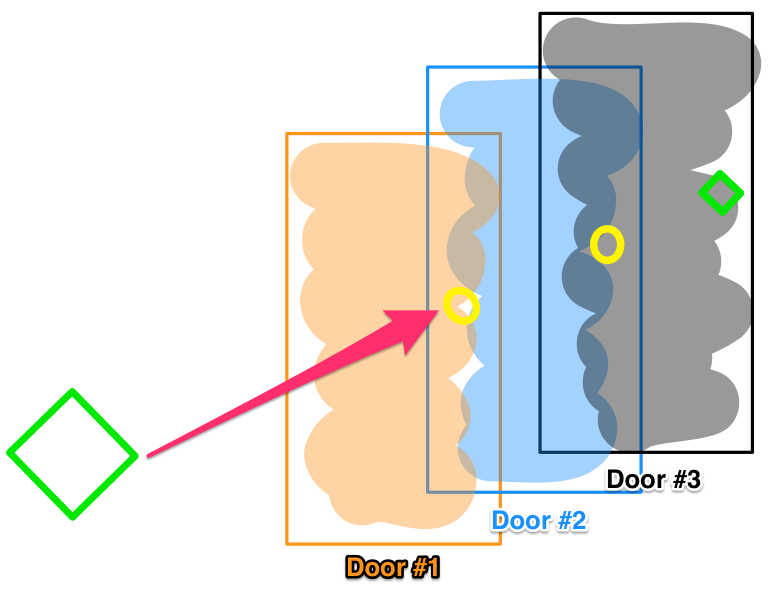
Let’s consider a locked door pathway, where opening Door #1 lets you pass through to Door #2, and so on sequentially to a final Door #3. Now imagine a drug that easily unlocks Door #3 , and effects a robust treatment, when tested in vitro. But in actual patients, systemic complexities block that drug from ever reaching Door #3. This is an oversimplification, of course. Biological systems are exponentially more complex than literal locked doors. But it illustrates how a drug’s efficacy can be foiled by confounding variables in vivo. Homeostatic mechanisms may identify the medicinal interloper as a threat. Like an adversarial immune response, the body’s regulatory processes counteract the treatment, as metabolism ramps up to accelerate its degradation before its target, or compensatory feedback loops are activated to blunt the response. Evolution has honed these defenses over eons – foiling our chemical intrusions.

With simple disorders, we’ve already plucked the low-hanging fruit. Prior generations found silver bullet treatments that directly and permanently relieved symptoms. The current shift from novel synthetic drugs to biologics may extend this opportunity and allow more treatments based on single drugs. But remaining diseases result from hugely complex and intersecting biological pathways, and silver bullets gave way to pattern recognition and statistical correlation – with mixed results.

When this post was originally written, a call to “revisit compounds that have initially discarded for reasons other than toxicity” was suggested. I’m happy to say that In Silico testing has become a reality in the interim. In no way I am claiming credit (although you never really know) but it was a likely outgrowth of application of statistical learning, tapping electronic health data. Repurposed drugs like phenoxybenzamine, entacapone and dimethyl fumarate have been the result.

However, a surfeit of data runs the risk of not only curve-fitting, but also increasing degrees of freedom and the number of comparisons runs the risk of discovering statistically significant, but spurious relationships. It is crucial to ensure that chance causality is excluded – hence the need for multi-dimensional statistical corrections like Holmes-Bonferroni and Bowmanini. Methods must be robust, and interpretations grounded in sound scientific and statistical reasoning.

Still, opportunity exists in mining troves of patient data to uncover statistical relationships and patterns between treatments, diseases, and outcomes. While randomized trials struggle to accommodate multiplying variables, big data analytics and longitudinal cross-validated EHR studies can add to the picture. They may reveal places where our existing tools, in new combinations, tested first in silico and only advanced to clinical trials when likely to succeed, can turn the tide on refractory illnesses inadequately treatable like vasospasm. This is in no way a solved problem – the answers we seek may already exist buried within the overwhelming noise of modern medicine’s myriad observations. But by listening to the data, we just may hear medicine’s deepest truths whispered through the cacophony.

A quick look back at the blog

I’ve been blogging occasionally over the last few years, and there is no denying that this is a (very) niche blog mostly focusing on the interaction between healthcare, technology, machine learning and process analytics as they relate to operations.

Despite that I’m delighted that the blog had the sum total of 7384 views (!) from 4782 unique visitors (!!) suggesting that the average visitor reads 1.54 posts (!!!).

Realizing that some of the folks who land here do so by accident or are bots, that suggests to me that the average # of reads by real people who land here is much higher, which is gratifying.

Most traffic, of course, comes from the USA. A big hi to the one person who read me from Tanzania.


The most popular posts on the blog are the following:

  1. What big data visualization analytics can learn from Radiology
  2. What medicine can learn from Wall Street, Part 1 (& related posts)
  3. Mentoring, Compassion, Curing and Healing
  4. The danger of choosing the wrong metric
  5. Why does everything work in vitro but not in vivo?
  6. Black Swans, Antifragility, Six Sigma & healthcare operations.

Dear Doctor, (letter to a Doctor)


This is a post from a person I interact with on social media. It has been heavily modified to keep anonymity. I have obtained express consent from this person to share their views here.

Dear Dr. — Thanks for seeing my child today & conducting a comprehensive exam. We were pleased with your care & the recommendations received.

However, please work with your staff on:
1 -Don’t tell me ‘1 hour’ if I ask how long the the appointment will last and then expect me to be happy after more than three.   Yes – I do know I will have to wait  – a range would be helpful.
2 – When called to reconfirm by your staff, I asked if they had all of our reports sent 2 months ago which were printed for you (it’s a little complicated).   Don’t have them tell me ‘yes’ when the answer was ‘NO’.   Putting a ‘see me’ post it note on the file from a staff member who is out of the office is not helpful.
3 – You are excellent in what you do.  I’m happy to pay for your knowledge and expertise but not your data entry skills (see above).
4 – When I explain to your staff that my child is uncomfortable going to physician’s offices and I need to prepare him about what to expect, please don’t giggle.  Is this the first time your staff has been asked this question?  I can’t believe that.

Thank you.


Comments:

-A friend once sent a bill to his doctor for making him wait 3 hours.

-I hear you . Waiting forever is the worst! Some health professionals need to brush up on their interpersonal skills.

-(We) were just talking about the medical practitioners we’ve left over the years…because of their staff!!

-…staff was really frustrating.  …tried to give feedback constructively and professionally but the attitude was unreal.


Can anyone not relate to this?  (Unless you are a practicing physician or administrator and you are so busy you have no time to go to the doctor!)  I view this as a systems failure.  The processes to make sure that this patient had an excellent experience were not there – the Doctor seems to being doing all he can to make the experience great (except for the ubiquitous data-entry EMR curse that patients hate as much as physicians!), but the staff undermines his efforts and this visit goes squarely into the negative category.  Regardless of where you want to place accountability (the staff, the physician, the office manager, the administrator), the root cause of this negative experience could be looked at and improved.

What the patient (patient’s parent/responsible party) wanted in this circumstance was:

  1. Accurate scheduling (responsible booking, integration with MD’s calendar)
  2. Accurate information (saying “you should block off your afternoon, but we will try to get you out in an hour” would go a long way here)
  3. No data entry (hire a scribe or switch your EMR system!)
  4. Transmissible Review of information by a staff member (no “see me” post-its – that’s poor continuity of care)
  5. To be treated with respect and dignity (NO giggling or attitude).

The last item is the most concerning – I know that we are starting to recognize ‘compassion fatigue’ and ‘burnout’ in docs in increasing numbers, and it almost certainly crosses over to support staff.  But this offending staff needs to be trained/educated, or shown the door.  Someone else’s discomfort is never a cause for a healthcare staffer’s entertainment.  Better to create systems and processes that rein in the chaos and allow these staffers to feel less besieged and give a level of care that supports the hard-working doctor’s efforts, not negates them.